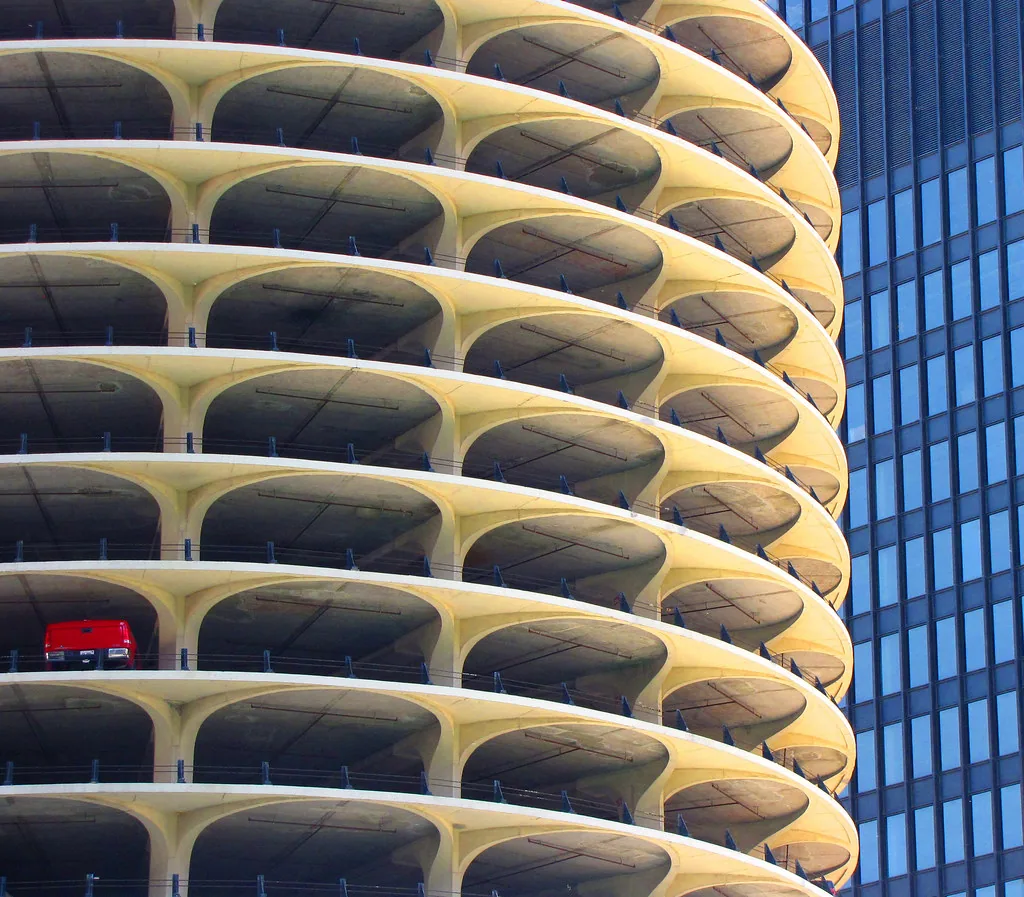
 Photo par o palsson via Flickr (CC BY 2.0)
In short:
- Supervision provides a continuous measure of occupancy, where knowledge usually rests on occasional counts.
- That measure informs three distinct decisions: pricing, the direction of enforcement and arbitration over use of the roadway.
- Measurement technologies differ in accuracy and maintenance cost, and do not answer the same need.
- Occupancy data is not personal data, unlike payment and enforcement data linked to an identifiable vehicle.
What measurement replaces
Without instrumentation, an authority knows its parking through counts carried out a few days a year. Those surveys give a snapshot, not a trend, and by construction they miss exceptional situations.
From snapshot to series
Continuous measurement changes the nature of the information available: it reveals hourly, weekly and seasonal variation, as well as the effects of a rule change after it takes effect.
The three decisions informed
- Pricing. A permanently saturated zone and a half-empty one do not justify the same tariff or the same maximum durations.
- The direction of enforcement. Enforcement is a limited resource. Measurement makes it possible to direct it towards genuinely saturated areas.
- Arbitration over the roadway. A parking space competes with other uses: deliveries, terraces, cycle lanes. An occupancy measurement makes that debate factual.
Technologies and their constraints
| Approach | Accuracy | Point to watch |
|---|---|---|
| In-ground sensor | Space by space | Maintenance and battery replacement |
| Image analysis | Zone by zone | Legal framework and acceptability |
| Payment data | Payments only | Sees neither evasion nor free parking |
None covers every need, which argues for aggregated collection through a territorial data platform rather than a single system.
The limit to set
The parking column is often the same support as the one used for connected street lighting, which makes it tempting to add other sensors. Each addition must be examined on its own merits: occupancy data does not fall under the same regime as data linked to an identifiable vehicle. The question is close to the one raised by citizen relations.
Frequently asked questions
What does parking supervision bring to a city?
Parking supervision provides a measure of occupancy and turnover of spaces, where knowledge usually rests on occasional counts. That measure supports three distinct decisions: calibrating pricing by zone and time slot, directing enforcement towards genuinely saturated areas, and arbitrating the use of the roadway between parking, deliveries and other functions. Without an associated decision, collection produces no observable effect.
Which technologies measure occupancy?
Several approaches coexist: in-ground sensors space by space, image analysis, or use of payment data. They differ in accuracy, installation cost and maintenance constraints, and do not answer the same needs.
Is parking data personal data?
Occupancy data for a space is not. Payment and enforcement data, however, may be, as soon as it relates to an identifiable vehicle, which requires a legal basis and a defined retention period.